Real environment
Balance work on the actual stairs, kitchen and rugs someone uses daily transfers better than the same exercise in a clinic.
Physical, occupational and speech therapy delivered in the home environment.
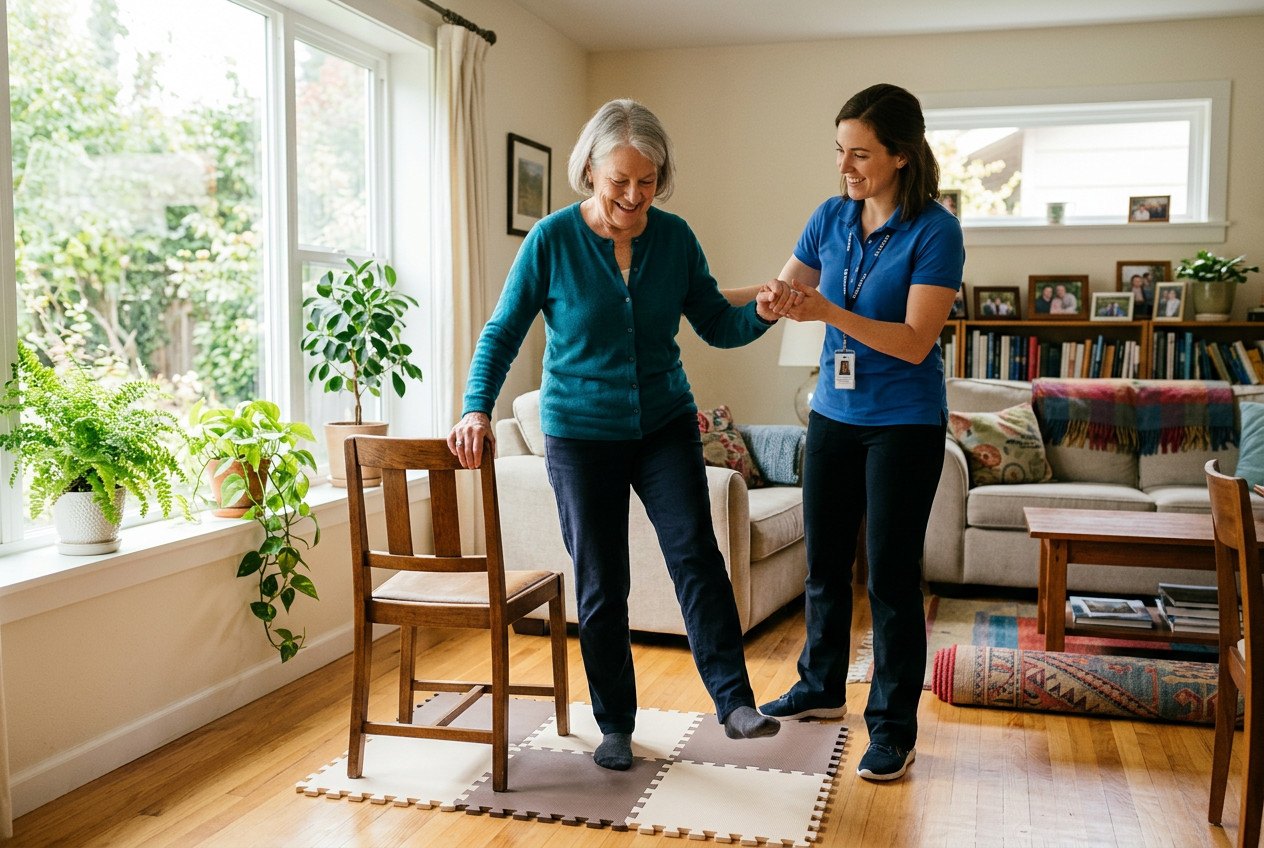
The home setting is not merely a convenience — for several kinds of rehabilitation it produces better transfer of skills.
Balance work on the actual stairs, kitchen and rugs someone uses daily transfers better than the same exercise in a clinic.
No travel means fewer cancellations for people with limited mobility or no transport.
Relatives can observe and learn how to support exercises safely between visits.
Each addresses a distinct set of goals.
Strength, balance, gait and endurance — commonly after joint replacement, a fall, or a stroke. Includes fall-risk reduction and home safety assessment.
The practical tasks of daily life: dressing, bathing, cooking, managing medication. Often involves adaptive equipment and home modification.
Speech, language, cognition and swallowing. Swallowing assessment matters clinically because aspiration is a serious risk after stroke.