Why it matters
Sustained isolation in older adults is associated with measurable declines in cognitive and physical health. Regular contact is not a luxury add-on.
Non-clinical support that often determines whether someone can remain at home.
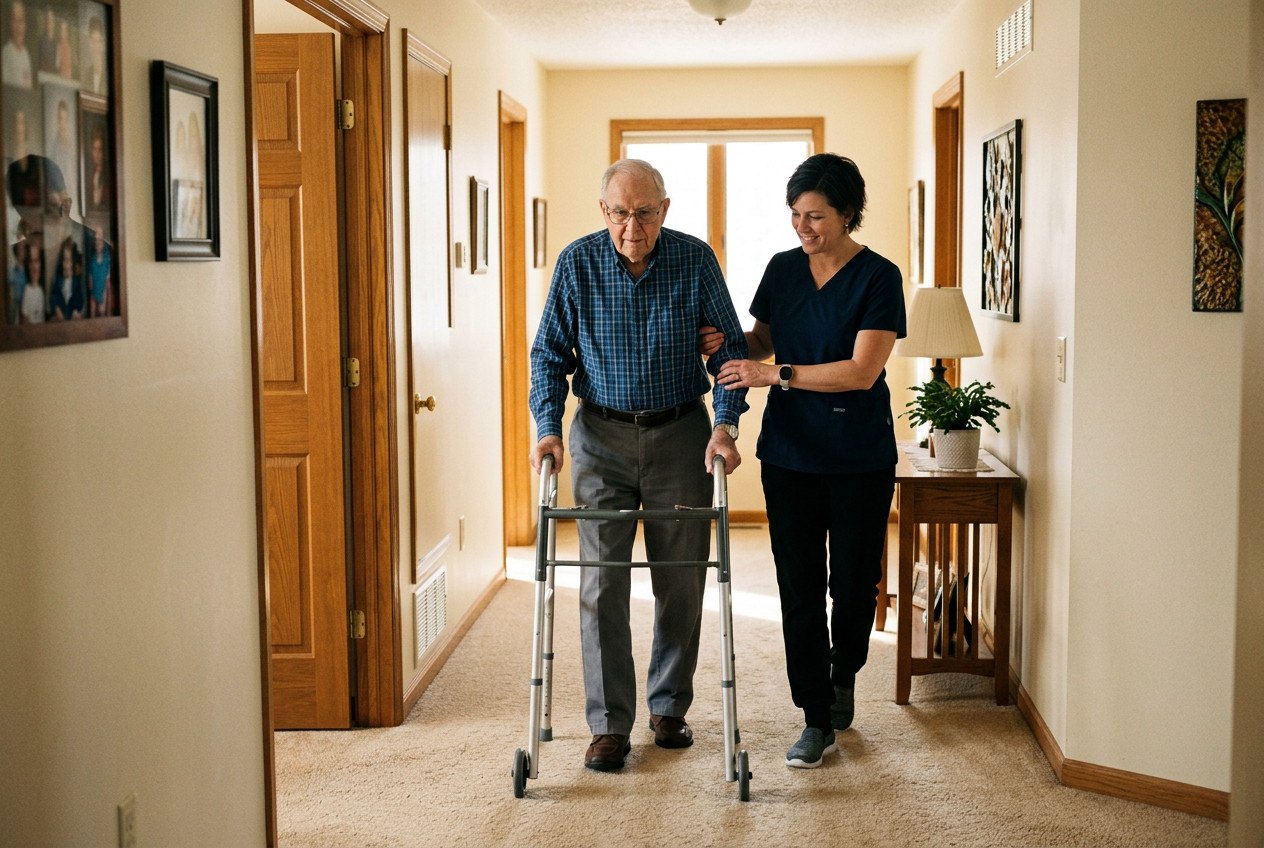
Hands-on assistance with the activities of daily living.
Assistance with washing, oral care, hair and nails — with attention to dignity and to fall risk, since bathrooms are where most falls happen.
Help with clothing and footwear, including adaptive clothing where dexterity is limited.
Safe movement between bed, chair and bathroom, using proper technique to protect both parties.
Discreet assistance, including with continence products where needed.
Social contact treated as a service in its own right.
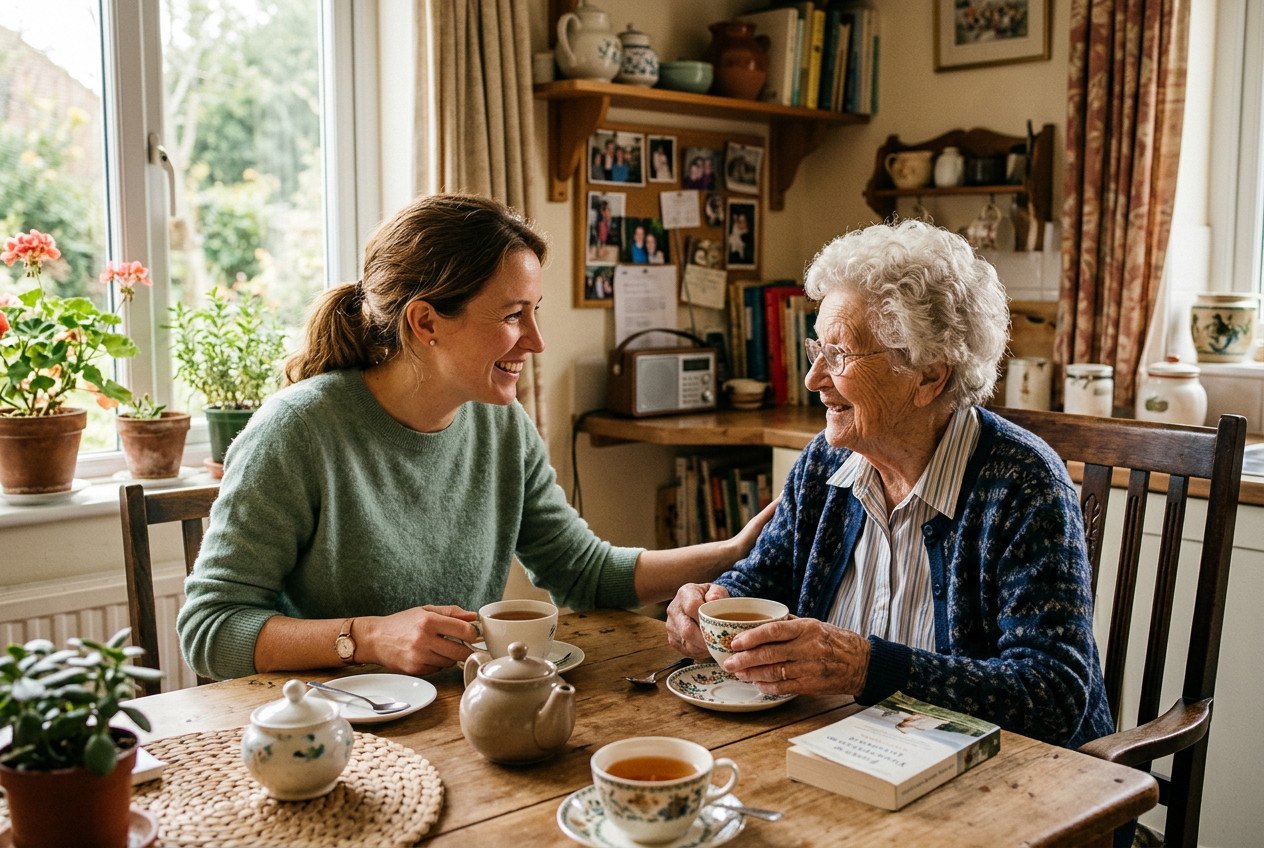
Sustained isolation in older adults is associated with measurable declines in cognitive and physical health. Regular contact is not a luxury add-on.
Conversation, shared meals, games, reading, walks, and accompaniment to appointments or social activities.
For someone with early cognitive decline, a companion's presence also provides a check that things are going well day to day.
Support for the household and for the family caregiver.
Meal preparation, laundry, tidying, shopping and errands. An orderly home is also a safer one — clutter is a fall hazard.
Planned cover so a family caregiver can rest. Caregiver exhaustion is one of the most common reasons a home arrangement fails, and respite exists to prevent it.